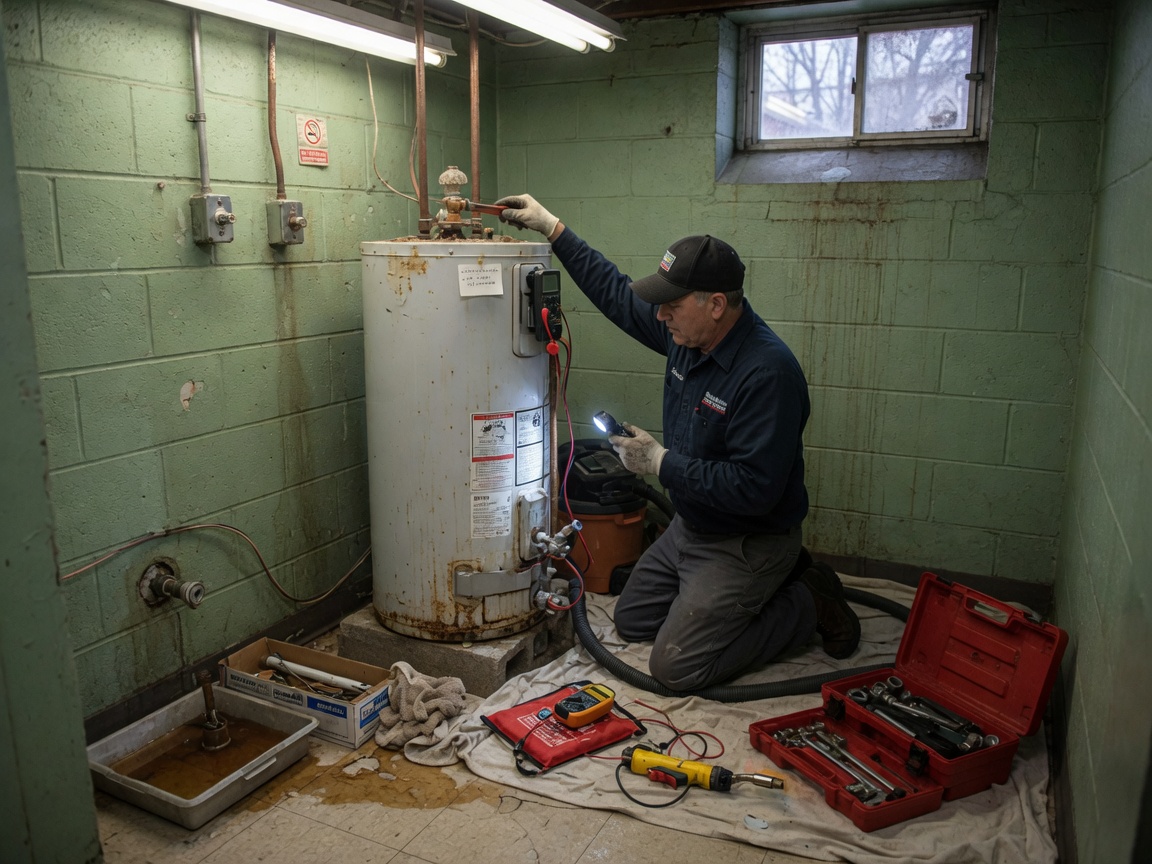
Binghamton's humid continental climate brings long freezing winters that accelerate sediment buildup in water heaters, especially in pre-1970 homes common on the Northside and in the First Ward. Technicians often encounter rusted tanks and failing elements when homes sit unheated during snow events, and the same cold snaps push gas models to work harder, wearing out control valves faster than in milder regions like Vestal. Proper diagnosis includes checking expansion tanks and venting to avoid code issues in tight older basements.
Leak detection plays a direct role here because small drips around the tank or connections can freeze and burst lines overnight in Southside or Downtown Binghamton properties. Repair work frequently involves replacing anode rods before they deplete completely, a step that extends tank life in Broome County's hard water conditions. Homeowners in Eastside neighborhoods with mixed copper and galvanized piping see more frequent thermostat failures due to mineral scale.
Commercial water heater repair in Johnson City or near Binghamton University Downtown Center demands attention to higher-volume units that run constantly during winter peaks. Technicians check for venting obstructions caused by heavy snow loads and test for carbon monoxide risks in older commercial spaces. These jobs differ from residential calls because downtime costs businesses more and requires same-day parts sourcing from local suppliers.
When addressing electric water heater repair, crews focus on element testing with multimeters because power fluctuations during storms can damage lower elements first. In Westside homes with finished basements, access often requires moving stored items, and repairs must account for the added humidity that promotes corrosion around electrical connections.
Technician insight
In Binghamton, the thing that catches most people out with Water Heater Repair is how quickly sediment builds in tanks during our long snowy winters, especially in Northside and Southside homes with older galvanized lines that already restrict flow. Homeowners often wait until hot water stops completely instead of scheduling an annual flush before the first hard freeze.
Sediment-clogged tank on the Westside
A Westside homeowner reported lukewarm water after a week of subzero temperatures. Inspection revealed heavy sediment blocking the lower element in a 15-year-old tank. The crew flushed the unit, replaced the element, and checked the anode rod, restoring full hot water without replacing the tank.
Water Heater Repair Services We Offer
✓Electric Element Repairs
Test and replace upper or lower heating elements in electric tanks to restore hot water without full unit replacement.
✓Gas Control Valve Repairs
Repair or replace faulty gas valves that cause inconsistent heating or pilot light failures common after cold weather stress.
✓Thermostat Replacement
Install new thermostats to fix temperature swings and prevent scalding or insufficient hot water in older Binghamton homes.
✓Anode Rod Inspection and Replacement
Check and swap depleted anode rods to slow tank corrosion accelerated by Broome County water conditions.
✓Residential Water Heater Repair
Diagnose and fix leaks, sediment issues, and component failures in standard tank units serving single-family homes.
✓Tankless Water Heater Maintenance
Clean heat exchangers and descale units to maintain efficiency in homes converting from traditional tanks.
Water Heater Repair Cost in Binghamton, NY
| Service | Typical Range | What Affects It |
|---|---|---|
| Diagnostic visit | $75–$125 | Often credited toward repair in Broome County homes |
| Electric element replacement | $200–$450 | Varies with access in older First Ward basements |
| Gas control valve repair | $250–$550 | Higher when venting work is required after snow events |
| Thermostat replacement | $150–$300 | Lower on standard residential tanks |
Ranges are typical for Binghamton, NY and confirmed with an exact written quote before any work starts.
How it works
- 1
Initial Inspection
Technician arrives, shuts off power or gas, and checks for leaks, sediment, and component condition while noting home age and piping type.
- 2
Diagnosis and Quote
Test elements, valves, or thermostats, then provide upfront pricing based on parts needed and access challenges in the specific neighborhood.
- 3
Repair Execution
Replace faulty parts, flush tank if required, and verify operation before restoring service.
- 4
Final Testing and Advice
Confirm temperature settings, check for leaks again, and explain maintenance steps suited to local winter conditions.
Pricing
Upfront pricing after inspection, no hidden fees.