2026-08-28 ·
How Binghamton Winters Cause Frozen and Burst Pipes
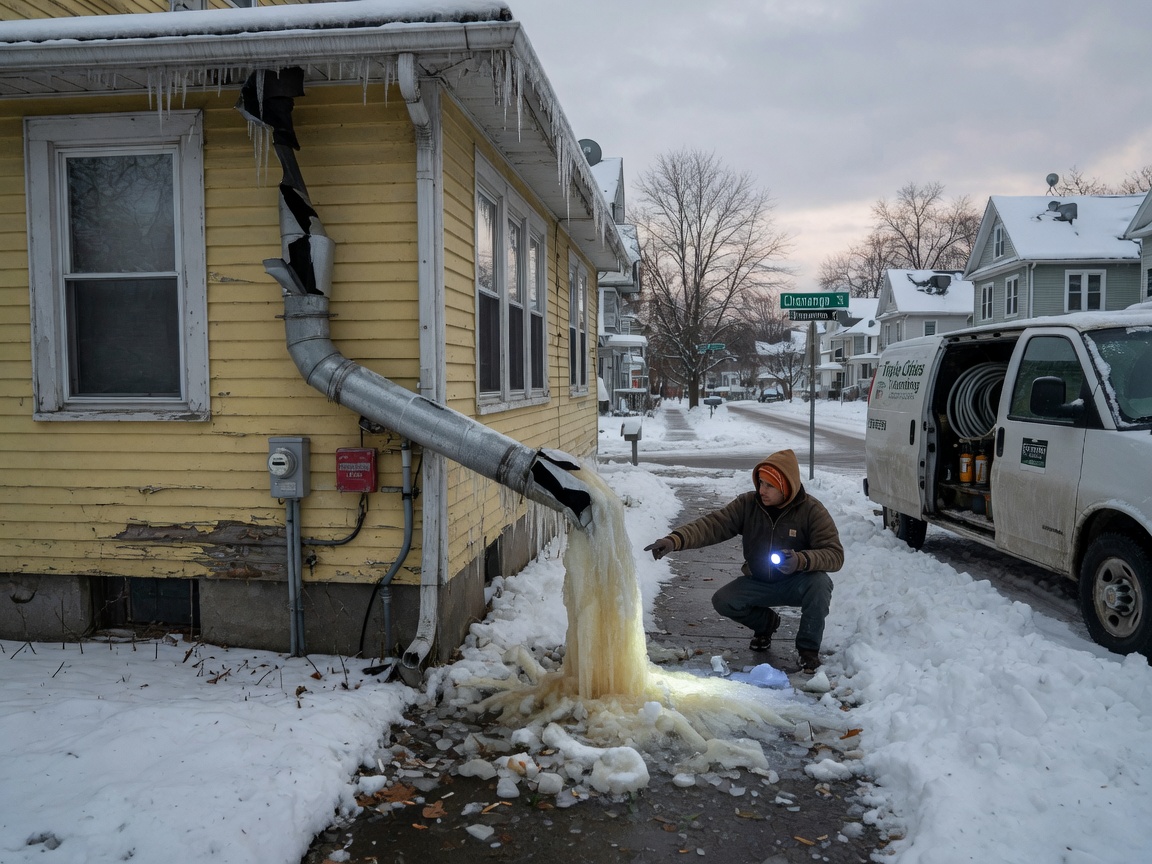
Binghamton's winters cause frozen and burst pipes when overnight lows drop below 20°F for several nights in a row, allowing standing water in supply lines to expand roughly 9% as it turns to ice and split copper or galvanized steel pipes that lack insulation or proper slope.
Temperature Drops and Pipe Freezing in Broome County
Binghamton's humid continental climate brings extended stretches of sub-freezing weather from December through February, with daytime highs often stuck in the low 20s and nights falling to single digits or below zero. These conditions hit unheated crawl spaces and exterior walls hardest in homes built before 1960 across the First Ward and Southside, where original plumbing runs along exterior framing without modern foam sleeves. Water in those lines stops moving at night and begins forming ice plugs that block flow and build pressure upstream. Once the ice expands against pipe walls, joints or elbows give way first, sending water into basements or wall cavities when temperatures climb back above freezing the next afternoon. Local plumbers see the same pattern repeat every January after a week of steady snow cover that insulates the ground but leaves above-grade pipes exposed.
Freeze-Thaw Cycles and Soil Movement Around Downtown Binghamton
Repeated freeze-thaw cycles in Broome County shift the clay-heavy soils that underlie Downtown Binghamton and the Westside, stressing underground supply lines and sewer laterals that run from the street to the house. When daytime sun melts surface snow and water seeps into the ground, then refreezes at night, the ground heaves and contracts, tugging on rigid pipes until fittings loosen or crack. Homes near Recreation Park and the Binghamton University Downtown Center sit on especially variable fill dirt from earlier development, making these shifts more pronounced. The result is often a hairline fracture that only leaks once the pipe thaws and pressure returns. Owners in these blocks notice sudden drops in water pressure or damp spots in yards after the first warm spell following a cold snap.
Vulnerable Pipes in Older Homes on the Eastside and Northside
Eastside and Northside neighborhoods contain many two-story wood-frame houses from the early 1900s whose galvanized steel supply lines have thinned from decades of corrosion, leaving walls as thin as a dime in places. These pipes run through uninsulated exterior walls and attics where attic temperatures track outdoor readings within a few degrees. When ice forms, the weakened metal splits lengthwise rather than at joints, creating long leaks that soak ceilings before anyone notices. Copper lines installed in the 1970s fare better but still freeze in exterior hose bibs and laundry rooms on the north side of the house, where wind off the river adds wind chill. Residents in these blocks learn to keep a slow drip from one faucet during forecasted cold nights to maintain flow and reduce ice buildup.
What to Do When Pipes Burst
When a pipe bursts after a freeze, shut off the main water valve immediately to limit damage, then call for emergency plumbing to isolate the section and replace the damaged run with PEX or copper sleeved in insulation. Technicians often reroute lines away from exterior walls during repairs to prevent repeat freezes. Homeowners in nearby Vestal face the same issues and benefit from the same approach. After the immediate fix, checking the full system prevents hidden leaks from turning into larger sewer line problems later; see sewer line repair for details on those inspections. Keeping a few cabinet doors open under sinks during cold weather also helps warm air circulate around vulnerable pipes in kitchens and baths.