2026-08-28 ·
Why Tree Roots Keep Blocking Drain Lines in the Southern Tier
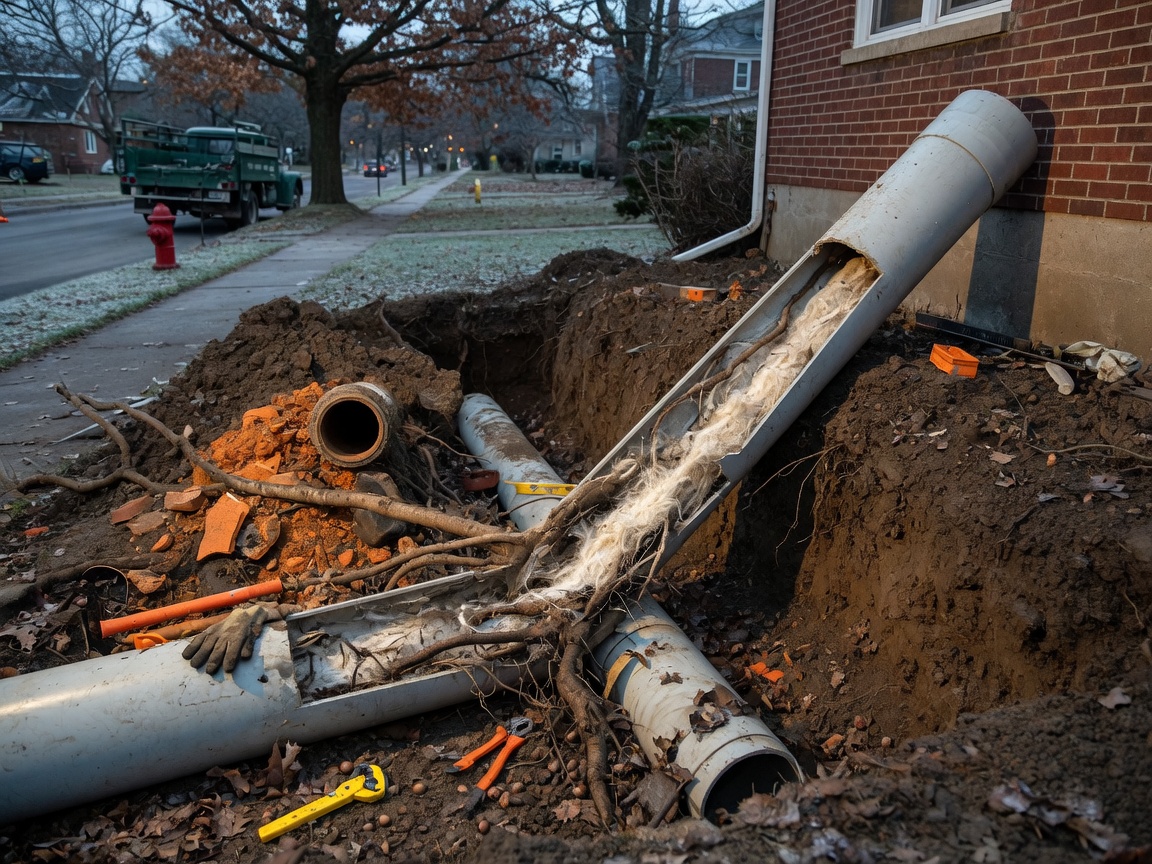
Tree roots block drain lines in the Southern Tier because the region’s cold winters and clay-heavy soils push roots toward the consistent moisture found in older clay and cast-iron pipes that still serve many Binghamton homes built before the 1970s. Once winter temperatures drop, roots follow the warmth and water vapor escaping from small joints and cracks, then expand in spring and split the pipe further.
How Local Soil and Terrain Guide Root Growth
Broome County’s glacial till and heavy clay soils hold water near the surface during the warm summers but crack and shift during freeze-thaw cycles common from November through March. These conditions create micro-channels that roots from maples and willows planted along streets in the First Ward and Northside follow straight to sewer laterals. In flatter sections of the Eastside and Westside, poor drainage keeps soil saturated longer, giving roots an even stronger signal to travel horizontally toward any underground water source. Homeowners near Recreation Park often see the same pattern because mature trees were planted decades ago directly above the original sewer trenches.
Climate Patterns That Worsen Intrusion
The humid continental climate delivers heavy spring rains followed by long dry spells in late summer, forcing roots to chase reliable subsurface moisture. Snowmelt in March saturates the ground around Downtown Binghamton and the Southside, then repeated freeze-thaw events widen existing pipe joints. By the time summer arrives, roots have already established inside the line and continue growing until they fully obstruct flow. The same pattern repeats each year in nearby Vestal and Johnson City where older housing stock shares the same pipe materials and tree cover.
Pipe Materials Common in Binghamton Neighborhoods
Many laterals under homes in the First Ward and along the river corridor remain clay or orangeburg, both of which develop hairline cracks that roots exploit within eight to twelve years of installation. Cast-iron lines in parts of the Eastside corrode from the inside, leaving rough surfaces that trap root fibers. Once a single root enters, it branches and multiplies quickly because the pipe provides both water and nutrients from household waste. Property owners who notice slow drains after heavy rains usually discover root masses rather than simple grease clogs when lines are inspected.
Practical Steps That Reduce Recurring Blockages
Regular camera inspections every two to three years let homeowners catch early root entry before complete stoppages occur. Where roots have already entered, mechanical cutting followed by lining or full sewer line repair stops the cycle more effectively than repeated snaking alone. Replacing sections with PVC or using trenchless lining prevents new roots from finding the same entry points. Homeowners in Conklin and Port Dickinson facing similar issues often combine these repairs with selective tree removal or root-barrier installation to protect the line long term. The same winter conditions that crack pipes, as explained in our article on frozen and burst pipes, also create the openings roots need each spring.